
Sinus Infection vs. Allergies
How to Tell the Difference (and Find Real Relief)
Is it a sinus infection or allergies? Nasal congestion, a pounding sinus headache, postnasal drip, and a stuffy nose that just won't quit, these symptoms affect tens of millions of Americans every year. The problem is, sinus infection symptoms and allergy symptoms look almost identical, especially in the beginning. Choosing the wrong treatment can mean weeks of unnecessary misery.
This guide breaks down everything you need to know: the key differences between sinusitis and allergic rhinitis, how to read your symptoms, when to see a doctor, and how to get fast sinus congestion relief, whether it's allergies, a sinus infection, or both.
What Is a Sinus Infection (Sinusitis)?
A sinus infection, also called sinusitis or rhinosinusitis, occurs when the hollow spaces behind your nose, cheeks, and forehead, your sinuses become inflamed and blocked. When those passages can't drain, mucus builds up and creates an environment where bacteria, viruses, or fungi can thrive.
Types of sinus infections:
Acute sinusitis — lasts less than 4 weeks; most commonly triggered by a cold or upper respiratory infection
Subacute sinusitis — symptoms last 4 to 12 weeks
Chronic sinusitis — symptoms persist for 12 weeks or longer, even with treatment
Recurrent sinusitis — four or more acute sinus infections in a single year
Sinusitis affects over 30 million Americans annually, making it one of the most common health conditions in the United States.
What Are Seasonal Allergies (Allergic Rhinitis)?
Seasonal allergies, medically known as allergic rhinitis or hay fever, are an immune system overreaction to airborne allergens like tree pollen, grass pollen, ragweed, mold spores, dust mites, and pet dander. When allergens enter your nasal passages, your immune system releases histamine — triggering the cascade of sneezing, itching, and runny nose that allergy sufferers know all too well.
Over 50 million Americans live with some type of allergy, and more than 19 million adults are affected by hay fever or seasonal allergic rhinitis each year.
Common allergy triggers by season:
Spring — tree pollen (oak, birch, cedar)
Summer — grass pollen
Fall — ragweed, mold
Year-round — dust mites, pet dander, indoor mold
Sinus Infection Symptoms vs. Allergy Symptoms: The Key Differences
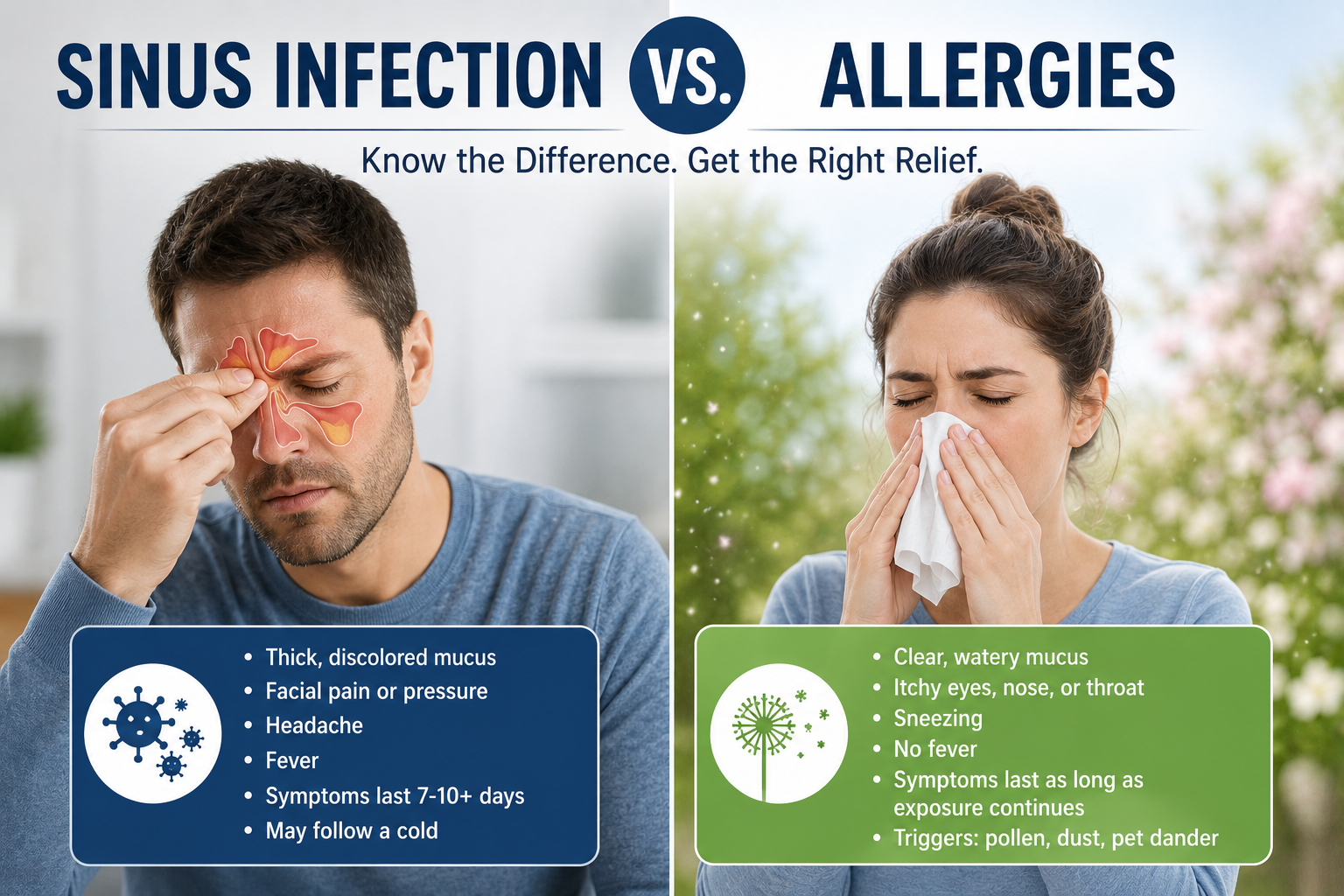
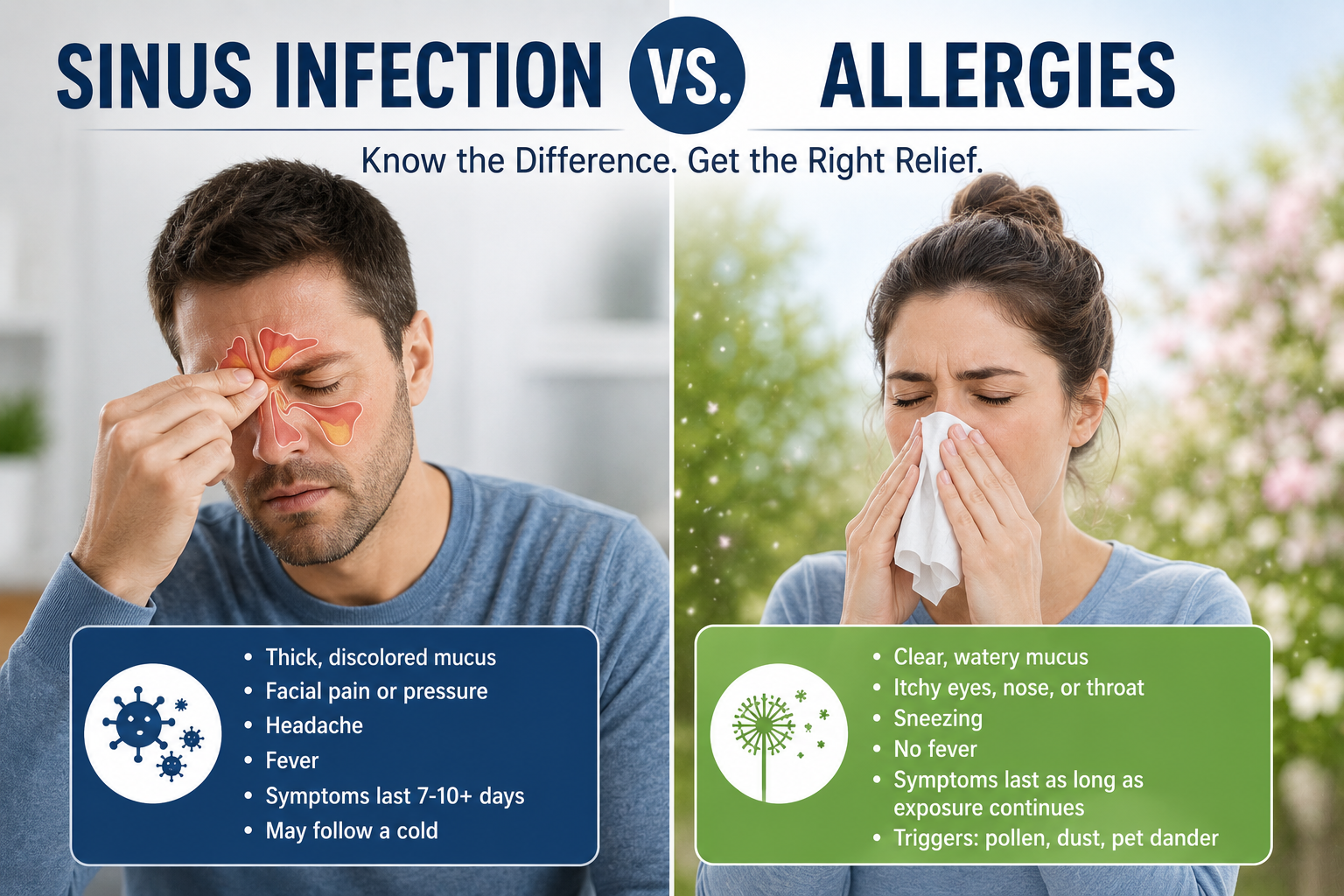
This is where things get confusing. Both conditions cause nasal congestion, runny nose, postnasal drip, sinus pressure, and fatigue. But there are clear signals that can help you tell them apart.
Sinus Infection Symptoms
Thick, discolored nasal discharge — yellow or green mucus is a hallmark of sinusitis, not allergies
Facial pain and pressure — a dull ache or intense pressure around the cheeks, forehead, eyes, and bridge of the nose
Sinus headache — pressure-related pain that worsens when bending forward
Loss of smell or taste (reduced olfactory sense)
Fever — more common with bacterial sinus infections
Bad breath (halitosis) from bacterial mucus
Tooth pain — sinus pressure can radiate to the upper molars
Fatigue — your body is fighting an active infection
Symptoms that worsen after 7–10 days or that improve and then suddenly get worse again ("double worsening")
Ear fullness or pressure
Seasonal Allergy Symptoms
Clear, thin, watery nasal discharge
Frequent sneezing, often in rapid-fire bursts
Intensely itchy nose, eyes, throat, or ears — itching is rarely a sign of infection
Watery, red, or puffy eyes (allergic conjunctivitis)
Nasal congestion that worsens around specific triggers
No fever
Symptoms tied to a season, location, or specific exposure (stepping outside, visiting a friend with a cat, etc.)
Relief from antihistamines like Zyrtec, Claritin, or Benadryl
The Fastest Way to Tell Them Apart
Ask yourself three questions:
Is my mucus clear or colored? Clear = likely allergies. Yellow or green = likely sinus infection.
Are my eyes and nose itchy? Yes = likely allergies. Itching is not a sign of infection.
Do I have facial pain or pressure? Significant facial pain points toward sinusitis.
Sinus Infection vs. Allergies: Side-by-Side Comparison
| Symptom | Seasonal Allergies | Sinus Infection |
| Nasal discharge | Clear, thin, watery | Thick, yellow or green |
| Itchy nose/eyes/throat | Very common | Rare |
| Sneezing | Frequent | Less common |
| Facial pain and pressure | Mild or none | Moderate to severe |
| Sinus headache | Possible | Common |
| Fever | No | Sometimes |
| Loss of smell | Rare | Common |
| Fatigue | Mild | Moderate to severe |
| Duration | Weeks to months (while exposed) | Days to weeks |
| Onset | Sudden, after allergen exposure | Gradual, often after a cold |
| Responds to antihistamines | Yes | No |
Seasonal Allergies
| Nasal discharge | Clear, thin, watery |
| Itchy nose/eyes/throat | Very common |
| Sneezing | Frequent |
| Facial pain and pressure | Mild or none |
| Sinus headache | Possible |
| Fever | No |
| Loss of smell | Rare |
| Fatigue | Mild |
| Duration | Weeks to months (while exposed) |
| Onset | Sudden, after allergen exposure |
| Responds to antihistamines | Yes |
Sinus Infection
| Nasal discharge | Thick, yellow or green |
| Itchy nose/eyes/throat | Rare |
| Sneezing | Less common |
| Facial pain and pressure | Moderate to severe |
| Sinus headache | Common |
| Fever | Sometimes |
| Loss of smell | Common |
| Fatigue | Moderate to severe |
| Duration | Days to weeks |
| Onset | Gradual, often after a cold |
| Responds to antihistamines | No |
How Long Does a Sinus Infection Last?
One of the most searched questions about sinusitis and for good reason. Understanding the timeline helps you know when to ride it out and when to call a doctor.
Viral sinusitis (most common): Symptoms typically improve within 7–10 days without antibiotics
Bacterial sinusitis: If symptoms fail to improve after 10 days — or worsen after briefly improving — a bacterial infection may be present and antibiotics may be needed
Chronic sinusitis: Symptoms lasting 12 weeks or longer despite treatment; requires evaluation by an ENT specialist
Seasonal allergies, by contrast, don't resolve on their own unless the allergen is removed or treated — they can linger for weeks or months throughout allergy season.
Can Allergies Cause a Sinus Infection?
Yes, and this is one of the most important things to understand. Allergies are one of the leading triggers of sinus infections. When nasal passages stay chronically inflamed from allergic rhinitis, they swell shut, blocking the drainage pathways that keep the sinuses clear. Trapped mucus creates the perfect environment for bacteria or viruses to multiply, turning an allergy flare into a full sinus infection.
This is why many people feel "extra sick" during allergy season: they start with hay fever, then layer a sinus infection on top. If your normally manageable allergy symptoms have recently gotten much worse, especially if the mucus has thickened and changed color, you're running a low-grade fever, or you've developed significant facial pressure, a sinus infection may have developed.
Sinus Infection Home Remedies and Treatment Options
For Allergies
Antihistamines (Zyrtec, Claritin, Allegra, Benadryl) — block histamine and reduce sneezing, itching, and runny nose
Nasal corticosteroid sprays — reduce chronic nasal inflammation
Allergen avoidance — HEPA air filters, frequent handwashing, checking pollen counts
Saline nasal rinse or nasal spray — flushes allergens from nasal passages before they trigger a reaction
Allergy immunotherapy (allergy shots) — for severe or year-round allergies
For Sinus Infections
Stay hydrated — water thins mucus and supports drainage
Steam inhalation and humidifiers — moist air loosens thick mucus
Warm compresses on the face to ease sinus pressure
Saline nasal rinse or nasal irrigation — thins mucus and clears debris
OTC pain relievers (ibuprofen, acetaminophen) — for sinus headache and facial pain
Decongestants — short-term use only (3 days maximum to avoid rebound congestion)
Antibiotics — only for confirmed bacterial sinusitis that doesn't improve; not effective for viral sinusitis
How Pressureze Nasal Spray Mist Works for Both Sinus Infections and Allergies
Here's something most people don't realize: whether your congestion comes from seasonal allergies or a sinus infection, the underlying problem driving your worst symptoms is the same — swollen, inflamed nasal passages that can't drain properly. That's exactly why Pressureze nasal spray mist is effective for both conditions. It works directly on the nasal environment rather than treating one specific cause.
What Pressureze Does — and Why It Works
1. Physically Removes Allergens Before They Trigger a Reaction For allergy sufferers, every pollen grain, dust particle, or mold spore that lands on your nasal lining is a potential trigger. Pressureze delivers a fine, targeted mist that rinses those allergens away from the nasal mucosa before they can activate your immune system's histamine response. Less allergen contact means less inflammation, and fewer symptoms.
2. Thins and Loosens Thick Mucus Whether your mucus is allergy-driven or the result of a sinus infection, mucus that's thin drains freely. Mucus that thickens and stagnates causes the sinus pressure, sinus headache, and congestion that feel unbearable. The moisture from Pressureze hydrates the mucus, lowering its viscosity so the sinuses can drain naturally.
3. Restores Healthy Sinus Drainage Proper sinus drainage is the single most important factor in recovering from sinusitis, trapped mucus is what allows bacteria to multiply and a sinus infection to worsen. By keeping nasal passages moist and open, Pressureze supports the natural drainage pathways that healthy sinuses depend on. This is the same principle behind nasal saline irrigation and rinses recommended by ENT specialists for both allergies and chronic sinusitis.
4. Soothes Inflamed and Irritated Nasal Tissue Nasal inflammation from either allergies or a sinus infection dries out and irritates the delicate mucosal lining. The fine mist from Pressureze moisturizes and calms that tissue, reducing the raw, burning irritation that makes every breath uncomfortable, without the rebound congestion risk associated with decongestant nasal sprays. You can use it daily without developing a dependency.
5. Supports Your Nasal Cilia, Your Sinuses' Built-In Cleaning System The tiny hair-like cilia lining your nasal passages sweep mucus, bacteria, debris, and allergens outward continuously. When nasal passages are dry and inflamed, from allergies, sinusitis, or both, cilia function slows dramatically. Keeping the nasal environment properly humidified with a spray like Pressureze helps these cilia do their job effectively, which benefits your sinus health regardless of what caused the inflammation.
The Bottom Line on Pressureze: Unlike antihistamines (which only work for allergies) or antibiotics (which only work for bacterial sinusitis), a well-formulated nasal mist like Pressureze addresses the physical environment of the nasal cavity regardless of the underlying cause. It's an ideal first-line approach that works before you even know for certain which condition you're dealing with — and it's safe enough for daily use throughout allergy season or during a sinus infection.
When to See a Doctor for Sinus Congestion
Most cases of allergic rhinitis and viral sinusitis can be managed at home. But see a healthcare provider if:
Symptoms last more than 10 days without improvement, or worsen after briefly getting better
You have a high fever (above 102°F / 38.9°C)
You have severe or worsening facial pain or sinus headache
You experience vision changes or swelling around the eyes
You have four or more sinus infections per year (recurrent sinusitis)
You suspect chronic sinusitis (symptoms lasting 12+ weeks)
Your allergy symptoms are uncontrolled despite OTC medication
An ENT (ear, nose, and throat) specialist can evaluate for structural issues like nasal polyps or a deviated septum, and prescribe targeted treatments for chronic or recurrent sinusitis.
Frequently Asked Questions About Sinus Infections and Allergies
Can you have a sinus infection without a fever?
Yes. Most sinus infections, especially viral ones do not cause a fever. Fever is more common with bacterial sinusitis but is not required for a diagnosis.
Is a sinus infection contagious?
Viral sinusitis (caused by the cold virus) is contagious. Bacterial sinusitis is typically not directly contagious, though the virus that triggered it may be. Allergic rhinitis is not contagious at all.
What color mucus means sinus infection?
Thick yellow, green, or dark-colored nasal discharge is strongly associated with sinus infection. Clear, thin, watery mucus typically points to allergies or a viral cold in its early stages.
Can allergies turn into a sinus infection?
Absolutely and frequently. Chronic nasal inflammation from untreated allergies is one of the most common causes of recurrent sinus infections.
How do I get rid of a sinus infection fast?
Stay hydrated, use a saline nasal spray or rinse, apply warm compresses, run a humidifier, and use OTC pain relief for discomfort. If symptoms worsen or persist beyond 10 days, see a doctor to determine if antibiotics are needed.
The Takeaway: Know Your Symptoms, Get the Right Treatment
Sinus infection or allergies? The clearest signals:
Allergies: Clear mucus, itchy eyes and nose, sneezing, tied to a season or trigger, no fever, responds to antihistamines
Sinus infection: Thick yellow or green mucus, facial pain and pressure, sinus headache, possible fever, worsens after 7–10 days
And remember, the two often go together. Controlling your allergies is one of the most powerful things you can do to prevent recurrent sinus infections. A daily nasal mist like Pressureze helps with flushing allergens and thinning mucus, and keeping sinus drainage pathways open.
This article is for informational purposes only and is not a substitute for professional medical advice, diagnosis, or treatment. Always consult a qualified healthcare provider for persistent or severe symptoms.