
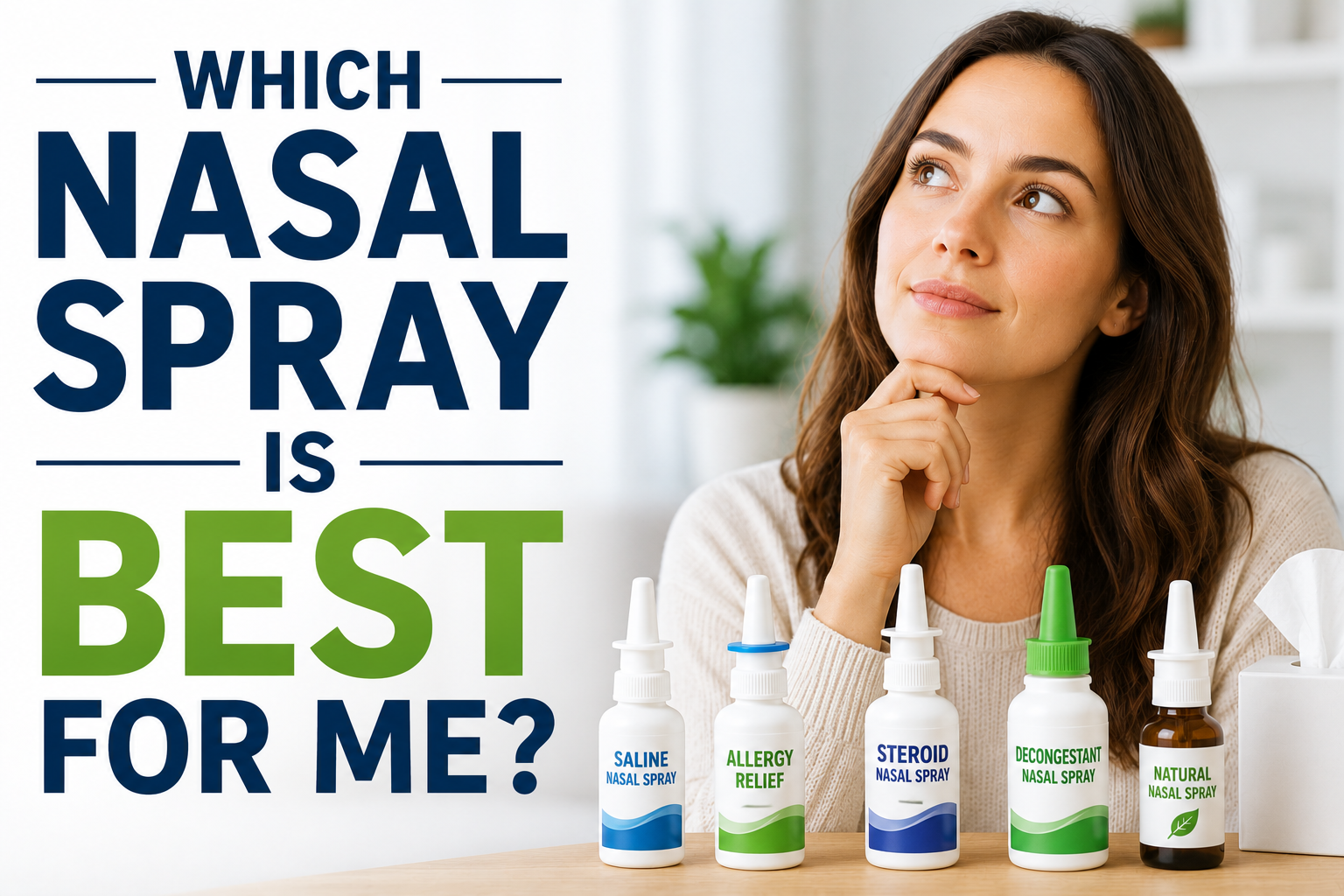
Which Nasal Spray Is Best for Me?
A Complete Comparison of the Top Nasal Sprays
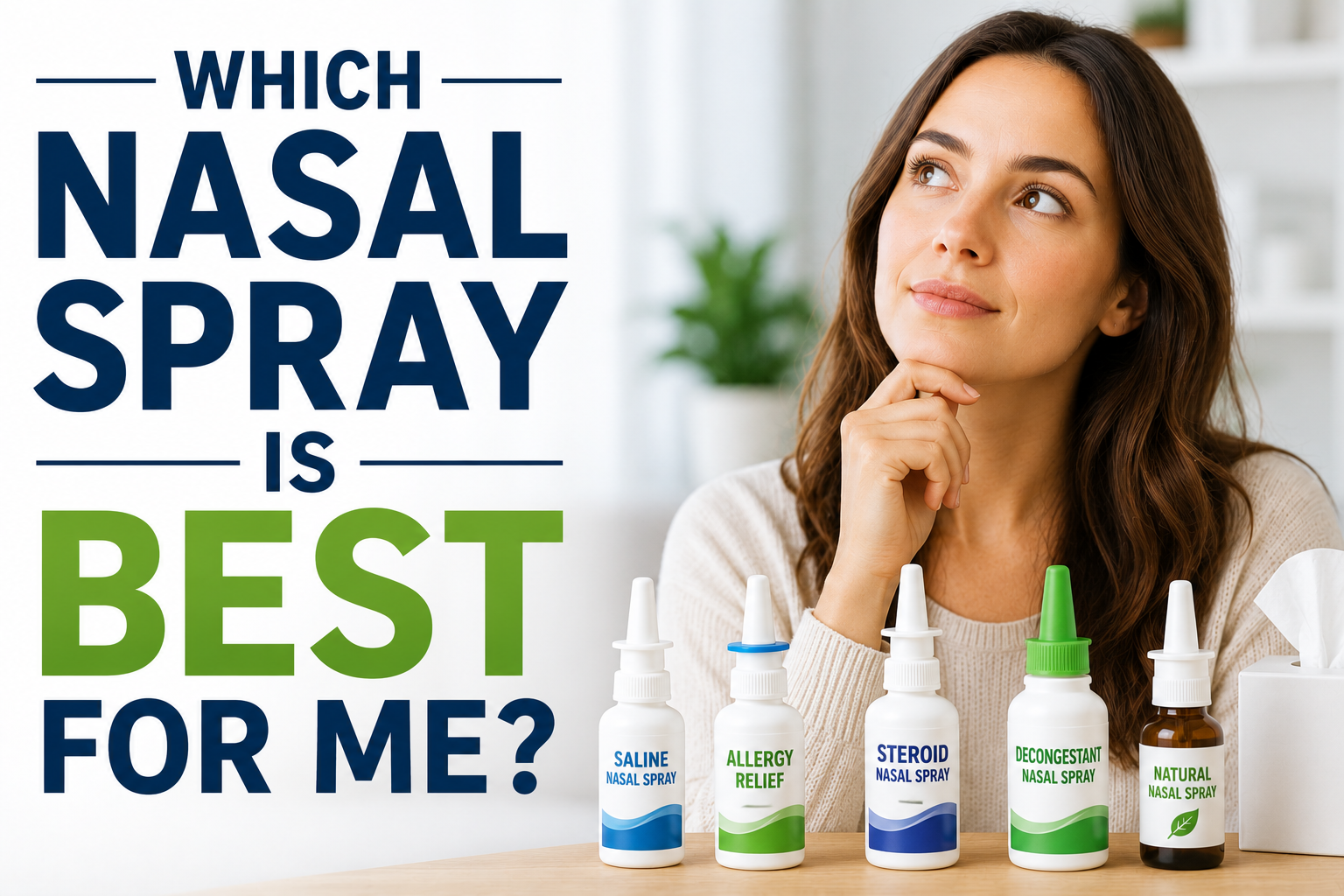
Stuffy nose. Sinus pressure. Blocked nasal passages that won't clear. If you're standing in the pharmacy aisle staring at dozens of nasal sprays wondering "which nasal spray should I use?”, you are not alone. With so many options, decongestant sprays, steroid nasal sprays, saline sprays, antihistamine sprays, and natural nasal mists, choosing the right one can feel overwhelming.
This guide breaks down every major category of nasal spray, compares the top-selling brands, explains the real risks of drugs, steroids, and chemical preservatives, and shows you why an all-natural, fully sterilized nasal spray like Pressureze Nasal Mist may be one of the safest and smartest choices for everyday sinus congestion relief.
The 5 Types of Nasal Sprays — What's the Difference?
Before comparing brands, you need to understand what category of nasal spray you're looking at. Each type works differently, treats different symptoms, and carries different risks.
1. Nasal Decongestant Sprays (Oxymetazoline-Based)
Examples: Afrin, Vicks Sinex, Mucinex Sinus-Max, Zicam Intense Sinus Relief
These are the "open your nose in seconds" sprays. They contain the drug oxymetazoline, which constricts swollen blood vessels in the nasal passages almost immediately, providing powerful, fast-acting relief for a blocked nose.
The catch: They must never be used for more than 3 consecutive days. Beyond that, they cause rebound congestion (rhinitis medicamentosa), a condition where your nasal passages become even more swollen and blocked when the medication wears off. Your nose literally becomes dependent on the drug to stay open. Breaking that dependency can be extremely uncomfortable and take weeks.
2. Nasal Steroid Sprays (Corticosteroid-Based)
Examples: Flonase (fluticasone), Nasacort (triamcinolone), Nasonex, Rhinocort (budesonide), Flonase Sensimist
Corticosteroid nasal sprays are the most commonly recommended OTC option for seasonal allergies and chronic sinusitis. They work by reducing inflammation in the nasal passages over time, blocking the release of histamines, prostaglandins, and other inflammatory compounds. They don't work immediately; most users need 1–2 weeks of consistent daily use before experiencing full relief.
The catch: Corticosteroid sprays come with a list of side effects and long-term concerns that users should understand before committing to ongoing use.
3. Antihistamine Nasal Sprays
Examples: Astepro (azelastine), Patanase (olopatadine)
Antihistamine nasal sprays block histamine receptors in the nasal passages, reducing allergy-driven congestion, sneezing, and runny nose. They work faster than steroid sprays and can be used as needed. However, they can cause drowsiness and a bitter aftertaste, and they're primarily effective only for allergy-related congestion, not colds, sinus infections, or dry air irritation.
4. Saline Nasal Sprays and Rinse Kits
Examples: Simply Saline, NeilMed NasaMist, Arm & Hammer Simply Saline, Little Remedies, Boogie Mist
Drug-free saline sprays use saltwater solution to moisten nasal passages, thin mucus, and flush out allergens and irritants. They're gentle, safe for daily use, and appropriate for all ages. However, most basic saline sprays are not sterile once opened and many contain chemical preservatives, both of which create their own problems (explained in detail below).
5. All-Natural Nasal Mists
Examples: Pressureze Nasal Mist, Xlear, propolis-based natural sprays
All-natural nasal mists use drug-free, chemical-free formulations to relieve sinus congestion without the side effects, dependency risks, or chemical exposure associated with medicated or preservative-containing sprays. The best ones, like Pressureze, do not contain alcohol and is also fully sterilized, making it the best options available for everyday nasal care.
Top-Selling Nasal Sprays: An Honest Side-by-Side Comparison
Afrin (Oxymetazoline) - Fast Relief, Serious Risks
Best for: Acute, severe nasal blockage from colds or sinus infections when you absolutely need to breathe
How it works: Shrinks swollen blood vessels in the nose within minutes via oxymetazoline (a sympathomimetic drug)
Side effects and risks:
Rebound congestion (rhinitis medicamentosa): Use beyond 3 days causes worsening congestion when the spray wears off the #1 most reported nasal spray problem in America
Nasal burning, stinging, and dryness with frequent use
Elevated blood pressure and heart rate, a concern for anyone with hypertension or cardiovascular conditions
Headaches and insomnia reported by some users
Not safe for children under 6, pregnant women (without physician guidance), or people with heart disease, thyroid disorders, or diabetes
Contains benzalkonium chloride (BKC) as a preservative, a chemical linked to nasal tissue damage and worsening congestion (see below)
Bottom line: A short-term emergency tool, not a daily nasal care solution. Powerful, but risky when misused, and very easy to misuse.
Flonase (Fluticasone Propionate)
Best for: Seasonal allergies, allergic rhinitis, chronic nasal inflammation
How it works: A synthetic corticosteroid that suppresses the immune response causing nasal inflammation, reducing congestion, sneezing, and runny nose over 1–2 weeks of daily use
Side effects and risks:
Nosebleeds — one of the most common complaints from regular Flonase users
Nasal dryness, crusting, and irritation — particularly in dry climates
Sore throat and headaches reported with ongoing use
Slowed growth in children — the FDA warns that long-term use of nasal corticosteroid sprays may affect growth velocity in pediatric patients; children should use the lowest effective dose for the shortest time
Eye pressure concerns — long-term corticosteroid use has been associated with increased intraocular pressure; users with glaucoma or a family history of glaucoma should consult a physician before ongoing use
Systemic corticosteroid absorption — although localized, some of the steroid is absorbed into the bloodstream; effects are modest at OTC doses but accumulate with prolonged use
Takes 1–2 weeks to work — not suitable for immediate relief
Contains benzalkonium chloride as a preservative in some formulations
Bottom line: Effective for managing allergic rhinitis long-term, but carries real hormonal (steroid) side effects, especially for children and long-term users. Not a first choice for occasional or drug-free users.
Nasacort (Triamcinolone) — Steroid Alternative to Flonase
Best for: Seasonal and year-round allergic rhinitis; an alternative to fluticasone-based sprays
How it works: Another intranasal corticosteroid, similar mechanism to Flonase — daily use builds up anti-inflammatory effect over 1–2 weeks
Side effects and risks:
Same class of concerns as Flonase: nosebleeds, nasal irritation, sore throat, headaches
Approved for ages 2 and up, but pediatric use still warrants caution regarding growth suppression
Like Flonase, carries risks for users with glaucoma and certain immune-compromising conditions
Generally alcohol-free and unscented, a slight advantage for fragrance-sensitive users
Bottom line: Comparable to Flonase in both effectiveness and side effect profile. Still a steroidal drug with all the associated concerns.
Astepro (Azelastine) — Antihistamine Nasal Spray
Best for: Fast-acting, allergy-specific congestion, sneezing, and runny nose
How it works: Antihistamine that blocks histamine receptors in nasal tissue, reducing allergy-triggered inflammation
Side effects and risks:
Drowsiness — while newer formulations have reduced this, azelastine can still cause sedation in some users
Bitter, unpleasant taste — very commonly reported; the spray often drips to the back of the throat
Nasal burning and stinging upon application
Not recommended for children under 6 without a pediatrician's approval
Not effective for non-allergic congestion — colds, sinus infections, or dry air irritation won't respond to an antihistamine spray
Bottom line: A legitimate option for allergy sufferers who need faster relief than a steroid spray provides, but the drowsiness and taste issues are real drawbacks.
Simply Saline / Arm & Hammer Saline Sprays — Drug-Free But Not Risk-Free
Best for: Gentle daily moisturizing and mucus loosening; safe for all ages in its basic form
How it works: Isotonic or hypertonic saltwater solution moisturizes nasal passages and helps flush out irritants
The hidden problems most users don't know:
Most are not sterile — once a multi-use bottle is opened, it can become contaminated with bacteria and mold with every use. Research has confirmed that nasal wash bottles harbor pathogens if not properly maintained.
Many contain benzalkonium chloride (BKC) as a preservative — a chemical with documented concerns for nasal tissue health
Isotonic formulas provide minimal decongesting action — they moisturize but don't actively reduce swollen nasal tissue
Coarse spray delivery in many budget saline sprays means the solution never reaches the inflamed tissue deep in the nasal cavity
Bottom line: Saline is a good concept, but execution matters. Contamination risk and preservatives undermine the "safe and natural" image that most saline sprays market.
NeilMed NasaMist and Sinus Rinse — Effective Flushing, But Technique-Dependent
Best for: Thorough nasal irrigation for congestion, sinusitis, and post-surgical nasal care
How it works: Saline irrigation system that physically flushes the sinuses with pressurized saltwater
Limitations:
Requires distilled or boiled water — using tap water in nasal rinse devices has been linked to serious infections, including rare but severe cases of Naegleria fowleri (brain-eating amoeba) infection; the FDA has issued warnings on this
Cumbersome to use — not convenient for on-the-go or quick relief
Can cause nasal dryness if overused
NasaMist versions are preservative-free — a genuine positive
Bottom line: An effective option for deep sinus flushing at home, but requires careful attention to water source and hygiene. Not a practical quick-use solution.
The Hidden Danger in Most Nasal Sprays: Benzalkonium Chloride (BKC)
Whether you're using a decongestant, a steroid spray, or even a "simple" saline, one ingredient keeps appearing in the label: benzalkonium chloride (BKC), the most widely used preservative in nasal spray products.
Manufacturers add BKC because it prevents bacterial and mold growth in multi-use bottles. But an accumulating body of published research raises serious questions about its safety when used intranasally:
Published research in the Journal of Allergy and Clinical Immunology found that BKC in nasal sprays may cause reduced mucociliary transport (the nasal passages' natural self-cleaning mechanism), rhinitis medicamentosa, and neutrophil dysfunction, meaning it may impair your nose's ability to fight infection
A review in Respiratory Medicine found evidence suggesting BKC can produce adverse clinical effects on human nasal tissue, including aggravation of rebound congestion
Research published in Clinical Therapeutics concluded that BKC causes toxic reactions in the nose, eyes, ears, and lungs and may worsen the symptoms of allergic rhinitis with sustained use
Studies using rhinostereometry (measuring nasal mucosal swelling) showed that BKC alone induces nasal mucosal swelling, the opposite of what you're trying to achieve with a nasal spray
Long-term use of intranasal corticosteroids containing BKC has been linked to high-grade dysplasia (abnormal cell changes) in nasal mucosa in some research
In other words: the very preservative added to keep your nasal spray "safe" from bacteria may be harming the tissue you're trying to treat, worsening congestion, damaging cilia, and creating a cycle of chronic nasal irritation.
The medical conclusion from several researchers? "The use of nasal formulations without BKC might be a reasonable alternative."
Why All-Natural Pressureze Nasal Mist Is Different — And Better
Now that you understand what's in most nasal sprays and why those ingredients cause problems, the advantages of Pressureze Nasal Mist become clear.
Pressureze was developed to deliver real sinus congestion relief without the drugs, steroids, rebound dependency, or chemical preservatives that make conventional nasal sprays problematic for everyday use.
100% Drug-Free — No Oxymetazoline, No Steroids, No Antihistamines
Pressureze contains no pharmaceutical drugs of any kind. That means:
No rebound congestion — you can use it as often as needed without fear of dependency or worsening symptoms
No hormonal effects from steroids — safe for children, pregnant women, and long-term users without the growth, eye pressure, or systemic absorption concerns of corticosteroid sprays
No cardiovascular risks — no elevated blood pressure or heart rate concerns
No drowsiness — safe for use any time of day, before driving, at work, and at school
Completely Preservative-Free — No Benzalkonium Chloride
Because Pressureze is fully sterilized (see below), it does not need BKC or any other chemical preservative to prevent contamination. That means:
No cilia damage — your nasal passages' natural self-cleaning defense stays intact
No chemical irritation to already-inflamed nasal tissue
No risk of worsening congestion from the preservative itself
No toxic exposure to a chemical that research suggests may cause nasal mucosal swelling and immune dysfunction
One of the Few Fully Sterilized Nasal Sprays Available
This is Pressureze's most important distinction. Pressureze Nasal Mist is one of the very few nasal sprays on the market that has been fully sterilized, meaning every dose is clinically clean and free from bacteria, mold, fungi, and other microbial contaminants.
Most nasal sprays, even "natural" saline varieties, are NOT sterile after opening. A contaminated nasal spray introduced directly into inflamed, vulnerable nasal tissue can introduce pathogens and worsen the very sinus infection or irritation you're trying to treat.
Full sterilization matters most for:
Anyone with chronic sinusitis or recurring nasal infections
People recovering from nasal or sinus surgery
Those with compromised immune systems, autoimmune conditions, or taking immunosuppressants
Infants and young children whose immune defenses are still developing
The elderly, who face greater risk from introduced pathogens
Anyone who simply wants to know that what they're spraying into their body is clinically safe
Fast-Acting Sinus Congestion Relief
Despite being entirely drug-free, Pressureze is formulated to act quickly. Users report feeling sinus pressure ease and nasal passages begin to open within minutes of use. The fine mist delivery system penetrates deep into the nasal cavity, reaching the inflamed tissue near the sinus openings where relief is needed most, not just wetting the surface of the nostril.
Safe for the Whole Family — Adults, Children, and Seniors
With no drugs, no steroids, no preservatives, and full sterilization, Pressureze is the rare nasal spray that is genuinely safe for:
Adults and seniors (including those with high blood pressure, heart conditions, or glaucoma concerns)
Children without steroid-related growth concerns
Pregnant and nursing women
People with multiple allergies or chemical sensitivities
Daily and frequent users without any dependency risk
Non-Habit Forming — Use It as Often as Needed
Unlike decongestant sprays that become addictive after 3 days and steroid sprays that require medical supervision for long-term use, Pressureze can be used freely, as often as needed, every day, without any concern about building tolerance, experiencing rebound effects, or requiring a weaning process to stop.
| Feature | Afrin | Flonase | Nasacort | Saline Sprays | Pressureze |
| Drug/Steroid Free | ❌ Drug | ❌ Steroid | ❌ Steroid | ✅ | ✅ |
| Preservative Free | ❌ BKC | ❌ BKC | ✅ Some | ⚠️ Some | ✅ |
| Fully Sterilized | ❌ | ❌ | ❌ | ❌ | ✅ |
| Works Fast | ✅ | ❌ (1-2 wks) | ❌ (1-2 wks) | ⚠️ Mild | ✅ |
| Safe for Daily Use | ❌ 3 days max | ⚠️ Limited | ⚠️ Limited | ✅ | ✅ |
| Rebound Congestion Risk | ❌ High | ❌ Low | ❌ Low | ✅ None | ✅ None |
| Safe for Children | ❌ 6+ only | ⚠️ 4+ w/ caution | ⚠️ 2+ w/ caution | ✅ | ✅ |
| Safe During Pregnancy | ❌ | ⚠️ Consult MD | ⚠️ Consult MD | ✅ | ✅ |
| Non-Habit Forming | ❌ | ✅ | ✅ | ✅ | ✅ |
Afrin
| Drug/Steroid Free | ❌ Drug |
| Preservative Free | ❌ BKC |
| Fully Sterilized | ❌ |
| Works Fast | ✅ |
| Safe for Daily Use | ❌ 3 days max |
| Rebound Congestion Risk | ❌ High |
| Safe for Children | ❌ 6+ only |
| Safe During Pregnancy | ❌ |
| Non-Habit Forming | ❌ |
Flonase
| Drug/Steroid Free | ❌ Steroid |
| Preservative Free | ❌ BKC |
| Fully Sterilized | ❌ |
| Works Fast | ❌ (1–2 wks) |
| Safe for Daily Use | ⚠️ Limited |
| Rebound Congestion Risk | ❌ Low |
| Safe for Children | ⚠️ 4+ w/ caution |
| Safe During Pregnancy | ⚠️ Consult MD |
| Non-Habit Forming | ✅ |
Nasacort
| Drug/Steroid Free | ❌ Steroid |
| Preservative Free | ✅ Some |
| Fully Sterilized | ❌ |
| Works Fast | ❌ (1–2 wks) |
| Safe for Daily Use | ⚠️ Limited |
| Rebound Congestion Risk | ❌ Low |
| Safe for Children | ⚠️ 2+ w/ caution |
| Safe During Pregnancy | ⚠️ Consult MD |
| Non-Habit Forming | ✅ |
Saline Sprays
| Drug/Steroid Free | ✅ |
| Preservative Free | ⚠️ Some |
| Fully Sterilized | ❌ |
| Works Fast | ⚠️ Mild |
| Safe for Daily Use | ✅ |
| Rebound Congestion Risk | ✅ None |
| Safe for Children | ✅ |
| Safe During Pregnancy | ✅ |
| Non-Habit Forming | ✅ |
Pressureze
| Drug/Steroid Free | ✅ |
| Preservative Free | ✅ |
| Fully Sterilized | ✅ |
| Works Fast | ✅ |
| Safe for Daily Use | ✅ |
| Rebound Congestion Risk | ✅ None |
| Safe for Children | ✅ |
| Safe During Pregnancy | ✅ |
| Non-Habit Forming | ✅ |
So Which Nasal Spray Is Best for You?
If you have severe, acute nasal blockage from a cold or sinus infection and need to breathe right now: A 1–3 day course of an oxymetazoline spray (Afrin, Vicks Sinex) can provide emergency relief, but stop at 3 days, no exceptions.
If you have seasonal allergies or chronic allergic rhinitis: A corticosteroid nasal spray (Flonase, Nasacort) used consistently throughout allergy season remains a clinically valid option, but understand the steroid side effects, especially for children or long-term use.
If you want drug-free, daily sinus relief with no side effects, no rebound risk, and no chemical exposure: Pressureze Nasal Mist is the clear best choice. It delivers fast relief without drugs, steroids, or preservatives, and its full sterilization makes it the safest nasal spray option available for everyday use, for the whole family.
Frequently Asked Questions: Nasal Sprays
What is the safest nasal spray to use every day?
Drug-free, preservative-free, fully sterilized nasal mists like Pressureze are the safest for daily use. Steroid sprays have daily dosing guidelines but come with long-term caution, especially for children. Decongestant sprays (Afrin) should never be used daily.
What nasal spray is best for sinus pressure relief?
For immediate sinus pressure relief, Pressureze Nasal Mist provides fast, drug-free action. For severe acute blockage, a short-term oxymetazoline spray is the fastest pharmaceutical option, but only for up to 3 days.
What is the best nasal spray for allergies?
Corticosteroid sprays like Flonase and Nasacort are clinically proven for allergy management. However, if you want a drug-free, preservative-free alternative for daily allergy season support, a fully sterilized natural nasal mist is a safer daily option alongside antihistamine tablets.
What nasal spray can I use while pregnant?
Drug-free saline nasal mists are generally considered the safest option during pregnancy. Pressureze Nasal Mist is a particularly strong choice given its full sterilization and complete absence of drugs, steroids, alcohol and chemical preservatives. Always consult your OB-GYN before using any medicated nasal spray during pregnancy.
Why does my nasal spray stop working?
If you've been using a decongestant spray like Afrin for more than 3 days, you may have developed rebound congestion (rhinitis medicamentosa). If your saline spray never seemed to work well, the issue is likely an isotonic formula, poor mist delivery, or contamination from an unsterile bottle. Switching to a fully sterilized, properly formulated mist like Pressureze often resolves this.
What nasal spray is best for a sinus infection?
For sinus infections, nasal irrigation (NeilMed with distilled water) can help flush the sinuses. A fully sterilized nasal mist like Pressureze is beneficial during a sinus infection because it won't introduce additional bacteria into already-infected tissue. For bacterial sinusitis, consult a doctor, as antibiotics may be needed.
Are nasal steroids safe for long-term use?
With medical supervision, corticosteroid nasal sprays are generally considered safe for adults. However, children, people with glaucoma, and those concerned about systemic steroid absorption should discuss long-term use with their physician. Preservative-free, drug-free alternatives like Pressureze are increasingly preferred for ongoing daily nasal health.
The Bottom Line: Choose the Nasal Spray That's Safe, Natural, and Actually Works
Most people don't realize how many risks come packed into a simple nasal spray bottle, from habit-forming drugs and hormone-altering steroids to toxic preservatives and unsterile solutions. The more you know about what's inside these products, the clearer the choice becomes.
Pressureze Nasal Mist is designed for the person who wants fast, effective sinus congestion relief without compromising their health, introducing chemicals into their body, or risking the rebound congestion trap. It's all-natural, drug-free, steroid-free, preservative-free, and uniquely, fully sterilized for safety that most nasal sprays simply cannot offer.
For sinus care you can trust every day for the entire family, Pressureze nasal spray may prove to be the better choice.
Clear your sinuses. Protect your health.
This article is for informational purposes only and is not a substitute for professional medical advice, diagnosis, or treatment. Always consult a qualified healthcare provider for persistent or severe symptoms.
Related searches: which nasal spray is best | best nasal spray for congestion | nasal spray comparison | best nasal spray for allergies | safest nasal spray for daily use | nasal spray side effects | Flonase vs Afrin | steroid nasal spray risks | preservative free nasal spray | natural nasal spray | best nasal spray for sinus pressure | nasal spray for stuffy nose | benzalkonium chloride nasal spray danger | drug free nasal spray | best nasal spray for sinus infection | nasal spray rebound congestion | all natural nasal mist | sterile nasal spray | best nasal spray for kids | nasal spray while pregnant